PPC
Ad Attribution Anomalies: How to Spot Tracking Breaks Before They Skew Your Data
Learn what causes ad attribution anomalies, how to detect tracking breaks across Google, Meta, and TikTok, and how AI-powered campaign monitoring catches discrepancies before they cost you.
 Meerkads Team · 9 min read

Summarize with AI
Contents 6 sections
You're three weeks into a campaign that looked promising. CPAs are climbing, ROAS is sliding, and your media buyer is getting nervous. You start cutting budgets, pausing ad sets, and renegotiating with channels, until someone notices that your pixel stopped firing correctly on checkout. It wasn't the campaign. It was a tracking break you never saw coming.
Ad attribution anomalies are one of the most expensive silent killers in paid media. They corrupt the data you rely on to make decisions. By the time the skew is obvious, the damage is already done: wasted spend, misallocated budgets, and campaign performance monitoring signals pointing in the wrong direction.
What Is an Ad Attribution Anomaly?
An ad attribution anomaly is any unexpected deviation in how conversions, clicks, or events are being credited, or miscredited, across your tracking infrastructure. It's not just a broken pixel. Attribution anomalies span a wide range of tracking failures, all of which can silently corrupt your cross-channel ad analytics and send your optimization decisions the wrong way.
- Tracking gaps: Events that stop firing entirely or fire inconsistently
- Duplicate attribution: The same conversion is credited to multiple channels
- Inflated data: Bot traffic or misconfigured server-side events are inflating conversion counts
- Delayed attribution windows: Conversions recorded days or weeks later, distorting real-time ad performance tracking
- Channel misattribution: Revenue going to the last click when another touchpoint drove the purchase
- Platform discrepancies: Gaps between ad platform data and your source of truth; GA4, your CRM, Shopify, and so on
Any one of these is enough to push your e-commerce ad performance analysis in the wrong direction.
Why Tracking Breaks Happen (More Often Than You Think)
Attribution infrastructure is fragile by nature. It depends on a chain of correctly functioning components: your website, tag manager, pixel code, server-side events, consent management platform, third-party scripts, and the ad platforms themselves. Any link in that chain can break silently.
Site Updates and CMS Changes
A developer pushes a new checkout flow, a theme update rewrites the page structure, or a URL path changes, and suddenly your conversion event no longer fires. No alert. No error message. Just vanishing data. For e-commerce teams tracking product-level ad performance, even a minor structural change can cause your attribution tool to go dark without warning.
Tag Manager Misconfigurations
GTM is powerful and error-prone. A trigger condition set slightly wrong can cause conversion tags to fire on every page, no pages, or only under specific conditions you can't reproduce. For Google Ads performance tracking tools and Meta ads analytics platforms to receive accurate signals, your tag configuration has to be exactly right, and it rarely is after a site update.
iOS Privacy Changes and Consent Friction
ATT prompts, cookie consent banners, and browser-level tracking prevention (ITP, ETP) all reduce signal fidelity. When consent rates drop or consent logic is misconfigured, your attributed conversions drop with them, and your Facebook ads analysis tool or Meta ads reporting tool will reflect an artificial performance decline that has nothing to do with the campaign itself.
Server-Side Event Duplication
Many advertisers run both browser-side and server-side pixels simultaneously. Without proper deduplication logic, the same purchase event can be sent twice, inflating your conversion data and telling Meta or Google your campaigns are performing better than they are. This is one of the most common causes of ROAS discrepancies between platforms and actual ecommerce revenue.
Platform-Side Changes
Ad networks update their APIs, attribution windows, and event ingestion logic regularly. A change on Meta's Conversions API or Google's enhanced conversions setup can silently alter how events are matched and attributed, making your cross-channel ad analytics unreliable without anything on your side having changed at all.
The 5 Warning Signs of an Attribution Anomaly
You don't need a data engineering team to catch tracking breaks early. You need to know what patterns to watch for, and ideally, a campaign anomaly detection system that watches for them automatically.
1. Sudden Drop in Reported Conversions Without a Traffic Drop
If your sessions stay flat but conversions fall sharply, your tracking is likely broken rather than your campaigns. This is the clearest signal, and the most commonly misread. Marketers often respond by increasing spend or changing creative before checking the pixel.
_What to check:_ Is the conversion event still firing? Has the confirmation page URL changed? Is the GTM trigger still valid?
2. Conversion Rate Spikes That Don't Match Revenue
If your ad platform reports a 40% conversion rate lift but your Shopify revenue didn't budge, you're almost certainly looking at duplicate firing or event misconfiguration. This is common after switching to server-side tracking without proper deduplication, and without real-time campaign monitoring in place, it can go undetected for weeks.
_What to check:_ Are events being sent from both browser and server without a deduplication key? Is the event's match quality score declining?
3. Channel Attribution Shifts Without a Media Mix Change
If paid search suddenly claims 80% of conversions when it was running at 40% last month, and you didn't change budgets, something upstream changed. This could be a UTM parameter stripping issue, a redirect breaking source attribution, or a tag firing out of sequence. It will show up as a dramatic shift in your cross-channel attribution tool before it makes sense as a business outcome.
_What to check:_ Are UTM parameters persisting through redirects? Is the referral exclusion list in GA4 correctly configured?
4. Platform Data and Source-of-Truth Data Diverge Sharply
Some divergence between your Facebook ad tracking data or Google Ads reporting and your CRM or analytics platform is normal. Attribution windows and view-through differences account for some of it. A sudden increase in that divergence is a red flag, and the kind of signal that ad budget anomaly detection is designed to surface automatically.
_What to check:_ Has your attribution window setting changed on the platform? Have you recently changed your checkout or order confirmation logic?
5. Anomalous Bounce Rates or Micro-Event Drops
Sometimes the macro conversion event fires correctly, but micro-events, add-to-cart, initiate checkout, lead form submit, go dark. This indicates partial tracking breakage that will eventually surface in your optimization signals, because the platform uses these events to train its bidding algorithms.
_What to check:_ Review your full event funnel, not just the bottom of it.
The Cost of Missing an Attribution Anomaly
Here's what makes attribution anomalies uniquely damaging: they corrupt both your historical data and your future decisions simultaneously.
- When your pixel is broken, and conversions disappear, automated bidding algorithms interpret this as campaign underperformance. Smart Bidding and Advantage+ start reallocating budget away from what might actually be your best-performing audiences. You end up in a feedback loop where bad data generates worse performance, which generates worse data.
- When events are inflated, duplicate firing, and misconfigured server-side events occur, the opposite happens. Platforms think they've found a winner and double down on it. You scale a campaign based on phantom conversions, and when the billing cycle closes, the true ROAS measurement is a fraction of what was reported.
- In both cases, the longer the anomaly goes undetected, the more expensive it becomes to unwind. For e-commerce teams running profitability analytics, even a week of corrupted data can meaningfully distort your customer acquisition cost tracking and make your next budget allocation decision structurally flawed.
How Meerkads Catches Attribution Anomalies Before They Cost You
Most attribution monitoring is reactive; you notice something is wrong when the numbers look strange enough to raise a flag. By that point, you've already been making decisions on corrupted data for days or weeks.
Meerkads is an AI-powered performance marketing platform that takes a proactive approach, continuously monitoring your performance signals across channels and surfacing deviations the moment they appear, not after the damage compounds.
Cross-Channel Performance Monitoring
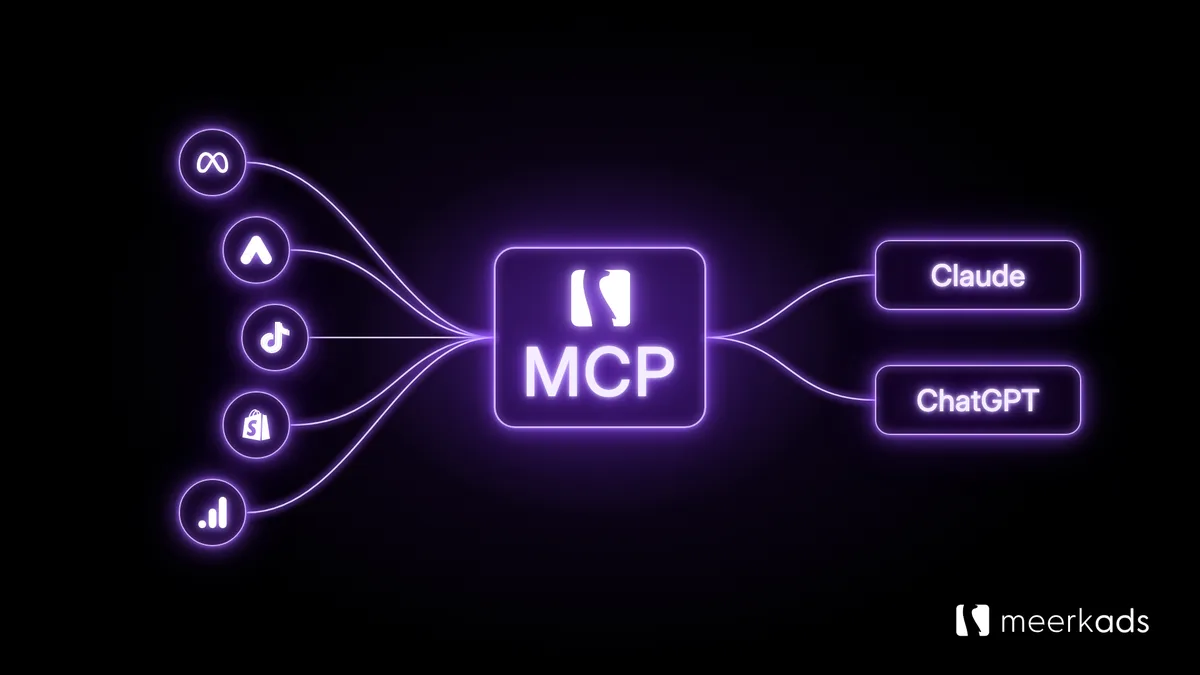
Meerkads doesn't just look at one platform. It monitors your attribution and performance data across Meta, Google, TikTok, and other channels simultaneously, including product-level ad performance tracking inside PMax and Meta Catalog campaigns where most tools go dark. When a discrepancy between platform-reported conversions and actual revenue crosses a threshold, you get an automated campaign monitoring alert, not a weekly report that's already stale.
AI-Powered Campaign Analysis That Understands Your Baseline
Not every dip is a tracking break. Conversions naturally fluctuate with day-of-week patterns, seasonal trends, and campaign changes. Meerkads' AI builds a performance baseline specific to your account and flags deviations that fall outside normal variance. This means you're not chasing false positives, and you're not missing real issues hidden in normal-looking noise. It's marketing anomaly detection that understands context, not just thresholds.
Unified Performance Scoring Across Channels
One of the core challenges in multi-channel attribution is that every platform grades itself differently. Meerkads scores every channel through a single, consistent performance index — so you're comparing like with like and making budget allocation decisions on a shared standard rather than irreconcilable platform claims. This unified view across your cross-channel marketing analytics eliminates the guesswork that drives most misallocation.
Real-Time Marketing Performance Alerts, Not Weekly Summaries
Rather than surfacing issues in a report built on Monday about what happened last week, Meerkads flags ad campaign anomaly alerts in real time. A sudden ROAS drop, an ad spend anomaly, a conversion volume deviation; these surface as they happen. You don't discover a tracking break after two weeks of corrupted optimization data. You get the signal the same day, and you can act on it before it compounds.
Detect Attribution Anomalies Before They Cost You
Attribution anomalies are inevitable in a complex, multi-channel paid media environment. Pixels break. Tags misconfigure. Platforms change their APIs. What separates high-performing media teams from those constantly fighting fires isn't whether they experience attribution problems; it's how quickly they catch and resolve them.
The marketers who get this right treat attribution monitoring as a continuous practice, not a monthly audit. They have real-time visibility into their campaign performance monitoring data, they're alerted to deviations before those deviations compound into decisions, and they have the data confidence to optimize aggressively because they know their signals are clean.
That's the standard Meerkads is built to deliver. Not just a dashboard of what happened, but an AI-powered marketing platform that monitors your attribution health, flags what's going wrong, and keeps your optimization decisions grounded in data you can trust, so you can act on your data instead of questioning it.
_Ready to stop flying blind on attribution? See __how Meerkads monitors__ your cross-channel ad performance and catches anomalies before they skew your data._